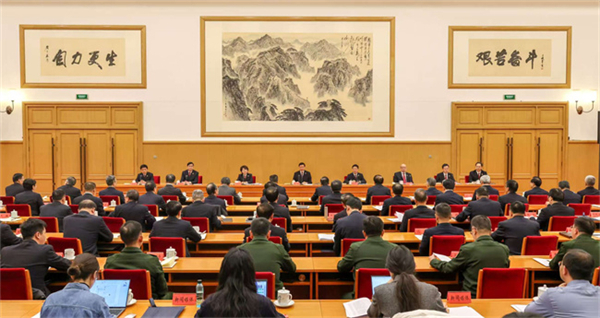
The national conference of chief prosecutors is held in Beijing on Jan 19.
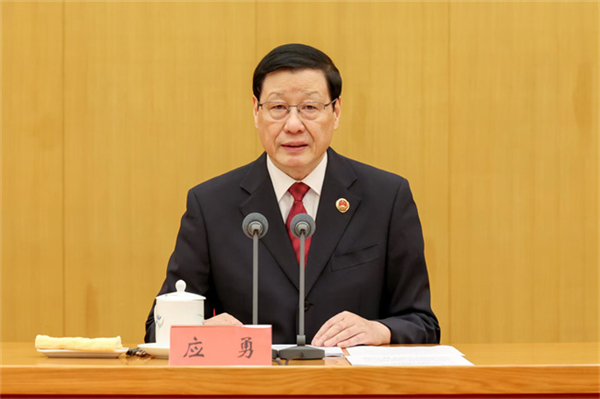
Ying Yong, Secretary of the Party Leadership Group and Prosecutor General of the Supreme People's Procuratorate, addresses the national conference of chief prosecutors.
The national conference of chief prosecutors was held in Beijing on Jan 19, reviewing procuratorial work in 2025 and outlining the main tasks for 2026.
Addressing the meeting, Ying Yong, Secretary of the Party Leadership Group and Prosecutor General of the Supreme People's Procuratorate (SPP), emphasized the importance of adhering to the principal responsibilities and core functions of legal supervision, focusing on high-quality and efficient case handling as the fundamental task, and fostering and practicing a correct understanding of performance. These efforts, he noted, aim to better fulfill the role of procuratorates as national legal supervisory organs in supporting the building of a peaceful and law-based China at a higher level, and to provide judicial safeguards for a solid start to the 15th Five-Year Plan (2026-30).
Ying noted that over the past year, procuratorial organs nationwide have closely aligned their work with the country's modernization drive by performing their legal supervisory duties in accordance with the law. They have continuously strengthened political building, effectively safeguarded high-level security and high-quality development, enhanced procuratorial services for the people, comprehensively deepened procuratorial reforms, and bolstered internal capacity building, achieving significant results across various domains, he added.
He further stressed the need to resolutely uphold the authority and centralized, unified leadership of the Communist Party of China (CPC) Central Committee, ensuring the Party's absolute leadership over all aspects of procuratorial work.
Ying called for adhering to the path of socialist rule of law with Chinese characteristics, accelerating the development of an independent knowledge system of procuratorial science, and firmly opposing and resisting Western misconceptions such as "constitutionalism", "separation of powers", and "judicial independence".
It is essential to accurately grasp the dialectical unity of taking a political perspective and acting in accordance with the rule of law, he said, organically integrating the implementation of the Party's lines, principles, and policies with the enforcement of State laws. This ensures procuratorial work on the new journey and in the new era advances steadily along the correct track of the rule of law.
Ying highlighted that building a peaceful and law-based China at a higher level is an integral part of Chinese modernization. He called for adhering to a holistic approach to national security, severely cracking down on all crimes endangering national security, and resolutely safeguarding the security of the country's State power, systems, and ideology.
Major vicious crimes and those drawing strong public condemnation must be punished strictly in accordance with the law to safeguard national security, social stability, and public safety, Ying emphasized. He urged the comprehensive and precise implementation of the criminal policy of tempering justice with mercy and the strict, law-based application of the leniency system for defendants who plead guilty and accept punishment.
Ying also underscored the need to punish cybercrimes in accordance with the law, and strengthen collaboration in building a law-based cyberspace. He called for intensifying efforts in the protection of minors' rights and interests and the prevention and control of juvenile delinquency, and upholding a "zero tolerance" stance in harshly punishing crimes against minors. A proper balance between punishment and protection for juvenile offenders should be upheld to comprehensively advance work in punishment of crime, education and rehabilitation, rights protection, public interest safeguarding, and crime prevention, he said.
Furthermore, he called for upholding and developing the "Fengqiao Experience" in the new era, a successful model of grassroots dispute resolution in China, and comprehensively promoting the law-based handling of public complaints.
Ying stressed fully and accurately implementing the new development philosophy and supporting high-quality socioeconomic development through the rule of law. Procuratorates should perform their procuratorial functions in combating duty-related crimes, coordinate the advancement of the anti-corruption fight, and severely punish serious economic crimes such as smuggling, illegal fundraising and financial fraud, in order to effectively safeguard the order of the socialist market economy.
While emphasizing upholding the principle of "unswervingly consolidating and developing the public sector, and unswervingly encouraging, supporting and guiding the development of the non-public sector", Ying highlighted the importance of implementing the Private Sector Promotion Law and deepening the special campaign on oversight of illegal cross-jurisdictional and profit-driven law enforcement and judicial practices. These efforts, he noted, aim to ensure equal legal protection for all business entities and foster the building of a law-based business environment.
Focusing on supporting high-level self-reliance and strength in science and technology, Ying noted that efforts should be intensified to enhance procuratorial protection of intellectual property rights, and to support the development of new quality productive forces in light of local conditions. He also highlighted the need to continuously deepen the special campaign for procuratorial protection of people's livelihoods, and consistently deliver procuratorial services that are perceptible, tangible, and beneficial to the people.
He emphasized reinforcing foundational procuratorial functions in criminal, civil, and administrative cases, and consolidating the foundation for legal supervision, with a focus on enhancing the review of arrests and prosecutions as well as the quality of review reports.
Procuratorates should intensify law-based supervision over criminal, civil, and administrative litigation activities to promote the fairness, stability, and authority of judicial adjudications, Ying said. They should strengthen whole-process supervision over civil and administrative enforcement activities and intensify supervision over the execution of criminal punishments and regulatory law enforcement, he added.
Moreover, procuratorates should strengthen and standardize procuratorial investigation by adopting a law-based and prudent approach that ensures accuracy. They should advance public interest litigation in statutory areas in line with the legislation on procuratorial public interest litigation, prioritizing "justiciability" to enhance the precision and standardization of procuratorial public interest litigation, said Ying.
He also called for strengthening the supervision and rectification of prominent issues in law enforcement and judicial work, improving long-term and regular mechanisms for handling pending cases, continuing to deepen supervision over civil cases concluded with final execution procedures, safeguarding lawyers' rights to review case files and meet with clients in accordance with the law, and promoting strict law enforcement and impartial administration of justice.
Ying emphasized that efforts should continue to improve mechanisms for achieving and assessing judicial fairness within the prosecution process. The establishment of systematic frameworks for high-quality and efficient case handling should be accelerated, covering laws and institutions, performance evaluation, operational procedures, and accountability, in order to promote the comprehensive improvement of the quality and efficiency of legal supervision.
Procuratorates should strengthen restraints and supervision over the exercise of procuratorial power, deepen the comprehensive supporting reforms of the judicial system, and promote the deepening and upgrading of digital procuratorial work, he added.
In addition, he stressed the importance of comprehensively enhancing strict self-discipline to maintain the integrity of the procuratorial system, steadfastly implementing the spirit of the CPC Central Committee's eight-point decision on improving conduct, and comprehensively improving the overall quality and capacity of procuratorial personnel.
In his concluding speech, Tong Jianming, Deputy Secretary of the Party Leadership Group and First Deputy Prosecutor General of the SPP, reaffirmed the significance of aligning procuratorial work with the CPC Central Committee's decisions and arrangements with political commitment, and ensuring that all procuratorial tasks are fully fulfilled with tangible results.
He called for coordinating key tasks and special work, enhancing the accuracy, intensity, and depth of procuratorial supervision, ensuring high-quality and efficient case handling by building appropriate systems and mechanisms and strengthening research and exploration.
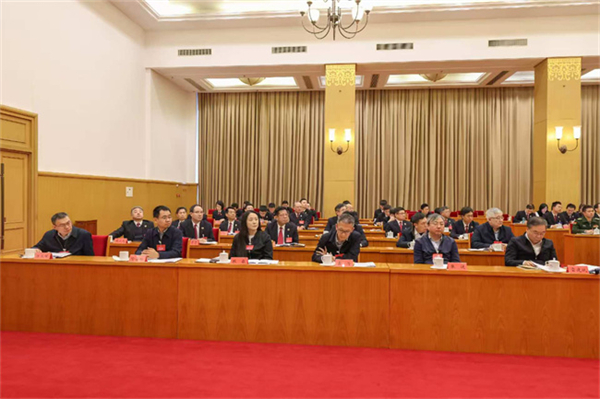
Lei Jianbin, Deputy Director of the Legislative Affairs Commission of the Standing Committee of the National People's Congress, and leading officials from relevant departments of central Party and State organs attend the meeting.
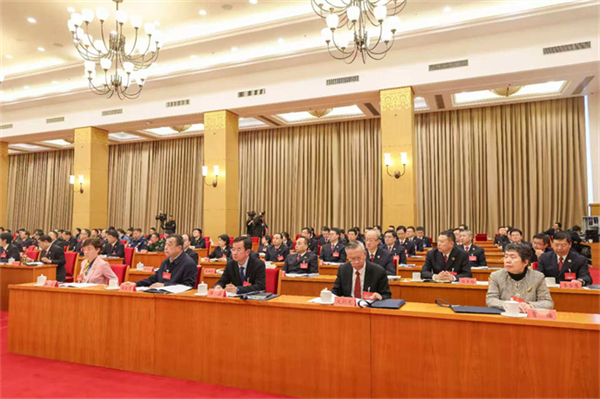
Deputies to the National People's Congress and members of the National Committee of the Chinese People's Political Consultative Conference attend the meeting.
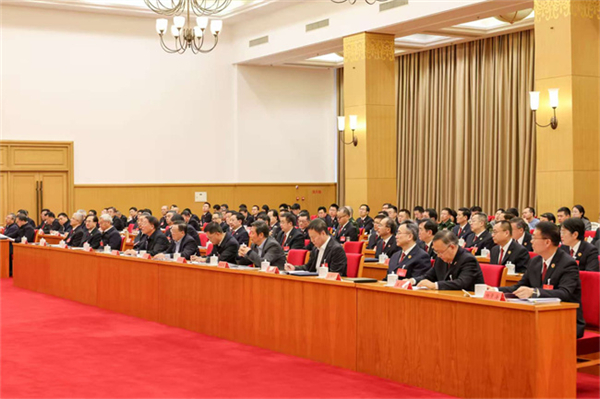
Officials including chief prosecutors of provincial-level procuratorates, chief prosecutor of the Military Procuratorate of the People's Liberation Army, chief prosecutor of the Procuratorate of the Xinjiang Production and Construction Corps, and the director and deputy directors of the Consultative Committee of the Supreme People's Procuratorate attend the meeting.
Lei Jianbin, Deputy Director of the Legislative Affairs Commission of the Standing Committee of the National People's Congress (NPC), attended the meeting to provide guidance. Leading officials from relevant departments of central Party and State organs, as well as a number of NPC deputies and members of the National Committee of the Chinese People's Political Consultative Conference, attended the meeting.
Participants of the meeting also included senior officials of the SPP, chief prosecutors of provincial-level procuratorates, chief prosecutor of the Military Procuratorate of the People's Liberation Army, chief prosecutor of the Procuratorate of the Xinjiang Production and Construction Corps, the director and deputy directors of the Consultative Committee of the SPP, and leading officials of the Discipline Inspection and Supervision Team of the CPC Central Commission for Discipline Inspection and the National Supervisory Committee stationed at the SPP, as well as heads of the departments and directly affiliated units of the SPP.